Overview
OpenArt is one of the world’s leading AI creative platforms, built to help anyone bring visual stories to life.
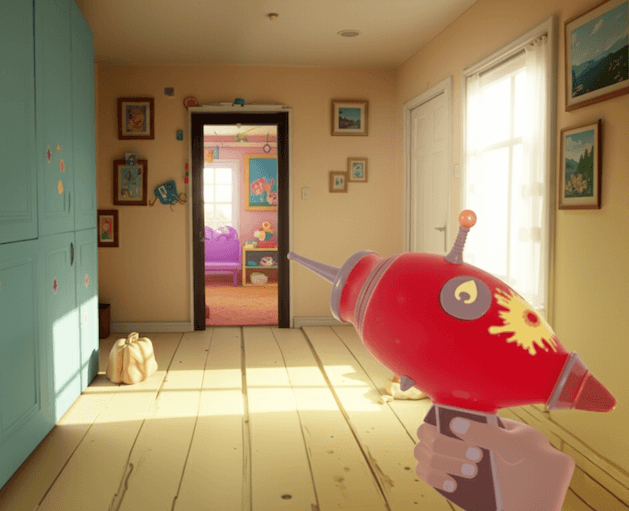
Using World Labs’ generative 3D world models, OpenArt launched OpenArt Worlds — a feature that transforms a single image into a fully navigable, persistent 3D environment creators can explore, return to, and build within over time.
For creators, this changes the workflow from prompting and hoping to directing and composing. Instead of regenerating scenes repeatedly to find the right result, creators can build a world once, revisit it anytime, and capture new shots from any angle with cinematic control and spatial consistency.
Collaboration
OpenArt’s platform spans image generation, video creation, character building, and world-building tools designed for AI-native storytelling.
With OpenArt Worlds, the team explored a larger idea: what happens when creators can move beyond generating isolated images and begin working inside persistent, explorable worlds?
World Labs provided the foundational world generation layer through its generative 3D world models. OpenArt built the creator-facing workflow on top — designing an experience focused on cinematic control, composition, and creative expression.
Together, the collaboration transformed world generation into a workflow accessible to creators, filmmakers, and storytellers.
OpenArt Worlds
OpenArt Worlds allows creators to upload a photograph, AI-generated image, or concept painting and transform it into a persistent 3D environment within minutes.
The workflow has three core steps:
Build: Upload any image and generate a navigable 3D world.
Direct: Move through the environment, frame the shot, and choose the exact camera angle.
Capture & Compose: Capture a production-ready 2D image, then add characters, objects, or atmospheric elements with prompts.
Each world is saved permanently in the creator’s library, making it feel less like a one-off generation and more like a virtual production set.
Technical Workflow
The integration was built on the World Labs API, which generates persistent, explorable 3D environments from a single image.
World Labs handled:
- World generation
- Spatial reconstruction
- Persistent environment consistency
OpenArt built:
- Camera navigation
- Shot capture workflows
- Prompt-based composition
- Export pipelines
Together, the system compressed complex 3D workflows into a lightweight experience accessible directly through OpenArt’s platform.
Results & Impact
OpenArt Worlds became one of OpenArt’s most visible launches of Q1 2026.
The launch generated:
- 7.3 million impressions on X
- 4,100 likes and 1,600 reposts
- 770 X News posts within the first 9 hours
- 250+ top creators posting about OpenArt Worlds across X, Instagram, and YouTube
- Trending placement in X News in the US
- More than 12 million impressions from influencer campaigns alone
More importantly, creators began building thousands of worlds every week — returning to saved environments and capturing more shots from worlds they had already created.
Why This Matters
AI creativity has historically been optimized for generation speed and visual quality, but storytelling requires something deeper: consistency, spatial understanding, and the ability to iterate within the same world over time.
OpenArt Worlds demonstrates how persistent world generation changes that workflow.
Instead of generating disconnected images, creators can now:
- Build reusable environments
- Maintain continuity across scenes
- Explore compositions spatially
- Direct shots with cinematic control
This represents a shift from generating images to building worlds — turning AI creation into a more spatial, iterative, and production-oriented process.
Looking Ahead
OpenArt’s broader vision is built around three stages of visual storytelling: static, dynamic, and immersive.
OpenArt Worlds represents the immersive stage: a persistent creative environment where creators can build characters, set worlds, and tell stories shot by shot.
The next major step is direct character placement inside the 3D world itself, allowing creators to position characters spatially before capturing the shot.
OpenArt Worlds, powered by World Labs, marks a shift from generating images to building worlds creators can return to again and again.