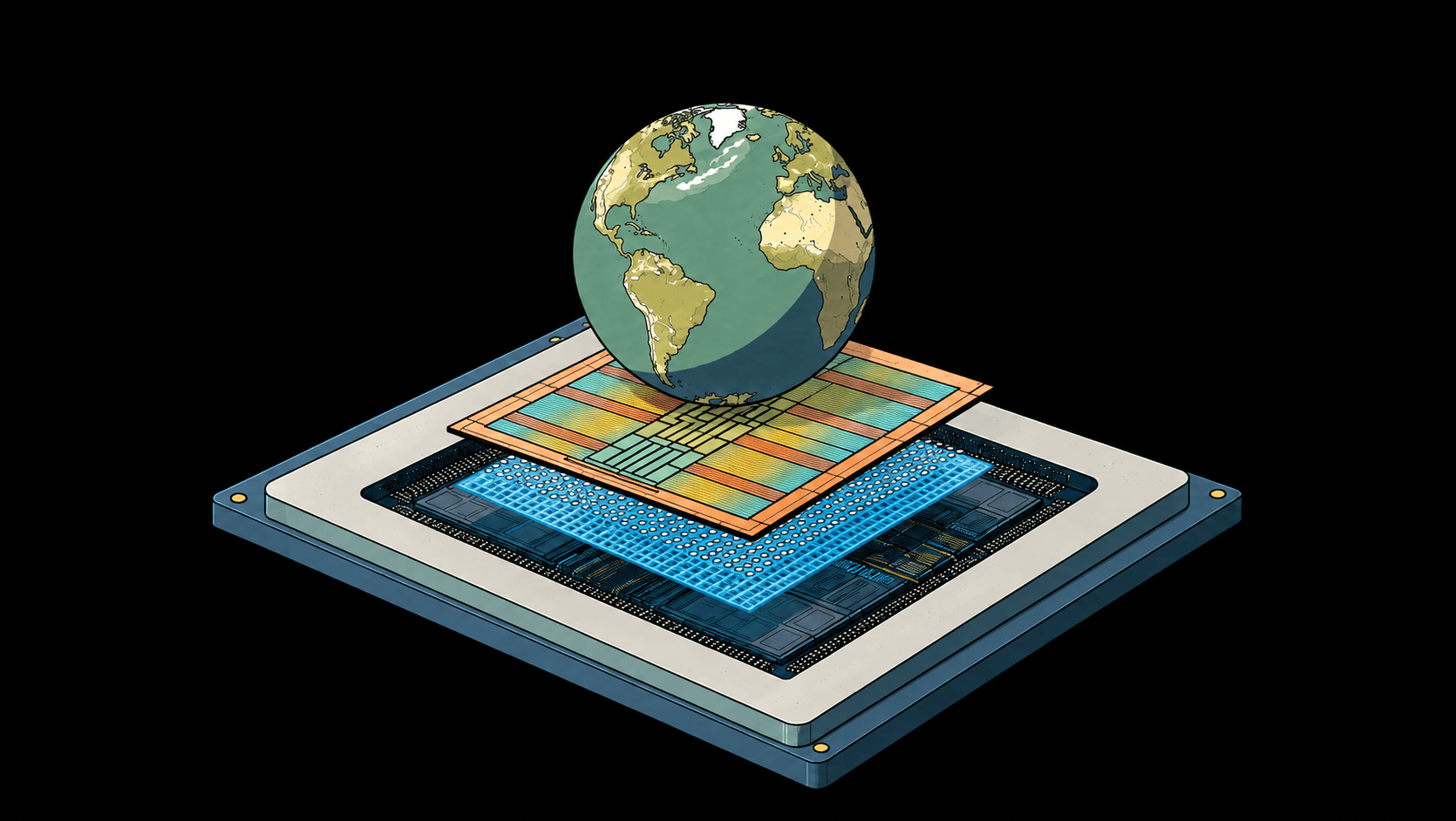
Today, we’re launching the World API — a public interface for generating explorable 3D worlds using World Labs’ multimodal world model, Marble.
The World API makes it possible to create navigable spatial environments directly from text, images, panoramas, multi-view inputs, and video. These worlds can be rendered on the web, exported into downstream tools, or integrated into interactive systems and simulations.
This release marks an important step toward making spatial intelligence accessible wherever software is built.
What the World API Enables
The World API turns world creation into a programmable capability.
Instead of treating 3D environments as static assets or standalone tools, the API allows worlds to be generated on demand and embedded directly into products and workflows. Each request produces a complete 3D world that can be explored, shared, and built on.
This approach lowers the barrier to spatial creation and opens workflows that were previously slow, expensive, or out of reach.
A World Model You Can Call
The World API is designed to feel familiar to developers while remaining approachable to a broader audience.
At a high level, using the API means submitting a world generation request and receiving a fully navigable 3D environment in return. World generation runs asynchronously and works across a range of inputs, including text, images, and video.
There is no special setup and no proprietary tooling required. Worlds integrate naturally into modern applications, creative tools, and simulation pipelines.
- For developers, world creation becomes a building block that can be triggered programmatically.
- For everyone else, spatial experiences can be built into products without maintaining a dedicated 3D production pipeline.
From Prompts to Worlds
Marble was created around a simple idea:
World models should lift whatever signals you have into a full 3D understanding of space.
With the World API, that idea becomes practical.
Developers can generate worlds from:
- Text
- Single images
- Multi-image sets
- 360° panoramas
- Video
Each request returns a navigable 3D world that captures layout, depth, lighting, and spatial structure. These worlds can be rendered in the browser, exported into other tools, or used as the foundation for interactive experiences.
What Becomes Possible
The World API is already being used across a range of domains. Below are three areas where world generation is changing how teams build products and experiences.
Gaming & Immersive Media
World generation allows teams to transform existing visual content into interactive spaces. Images, video, and cinematic sequences become explorable worlds that users step into rather than simply watch.
Platforms like Escape.ai are using the World API to turn 2D films into navigable 3D environments. A single video can generate both a spatial world and a viewing experience embedded within it — enabling new forms of interactive and social storytelling.
This shifts immersive media from passive playback toward environments that audiences can explore, share, and experience together.
Robotics & Simulation
In robotics and embodied AI, progress is limited by the lack of training data and plausible evaluation environments. Simulation plays a critical role — but building large numbers of diverse environments by hand is slow and costly.
The World API enables rapid generation of physically plausible environments from:
- Minimal real-world input (such as a set of images or a single 360° capture)
- Entirely synthetic, imagined scenes
These environments can be integrated into modern simulators such as NVIDIA Isaac Sim, MuJoCo, and RoboSuite.
Research collaborations with teams like Lightwheel demonstrate how scalable world generation enables evaluation across many environments, rather than a small set of carefully reconstructed scenes.
Architecture & Design
Designers imagine space long before it is modeled. The World API allows early visual ideas to become explorable environments in seconds.
Tools like Interior AI bring spatial visualization to consumers, while platforms such as xFigura integrate world generation into professional, node-based design workflows used by leading architecture firms worldwide.
Light, scale, and interior design can be explored without heavy modeling pipelines, making it easier to communicate ideas and align with clients.
The addition of a third dimension in seconds is incredible. From images to spatial experiences, this technology will drastically reduce the communication gap between architectural designers and clients.
Built With the World API
Early partners are already integrating world generation directly into their products.
Preview
Preview is a professional workspace for filmmakers and AI-native studios. By integrating the World API, Preview turns any image into an immersive, navigable environment.
Directors can explore scenes, find precise camera angles, and capture production-ready 4K stills. Filmmakers describe the experience as feeling like being on a real movie set — even when the world exists only in imagination.
Fenestra
Fenestra integrates the World API into architectural workflows, allowing designers to transform sketches and images into explorable worlds inside a web-based workspace.
Designers and clients can walk through concepts together, reducing friction between ideation, visualization, and communication. World generation becomes part of the design loop itself — not a separate rendering step.
The World Labs Platform
The World API is available through the World Labs Platform, where you can start using it today.
From the platform, you can:
- Generate and manage API keys
- Monitor usage and billing
- View pricing and purchase credits
- Access documentation, sample projects, and quickstart guides
Looking Ahead
As world models continue to evolve, we see a future where:
- Worlds are generated as easily as words and images
- Spatial intelligence becomes a shared layer across creative tools and physical AI systems
- Humans and agents can reason, interact, and collaborate inside generated spaces
The World API is our first step toward making that future programmable, and it's available today.