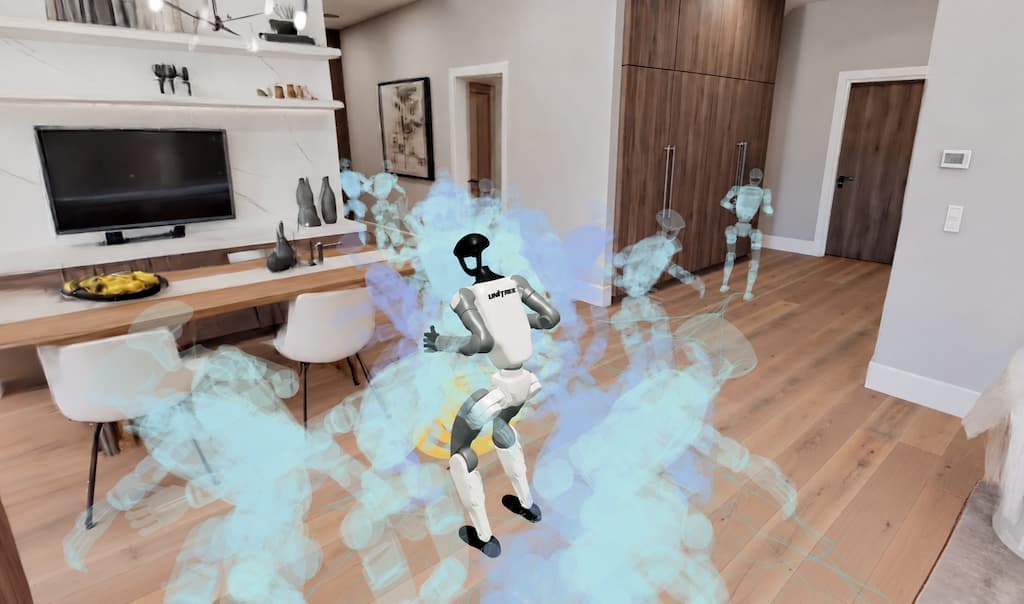
4DGS World Foundation Model Scene Integration with Relighting
Built by Adam Chernick, this experiment explores how AI-generated 3D worlds can provide dynamic lighting for streamed 4D Gaussian Splat (4DGS) performances.
The demo combines a World Labs generated 3DGS environment with a streamed Gracia 4DGS performer in a single browser scene. The generated world is then used to relight the volumetric capture, creating a more cohesive and immersive result.
Highlights
The project investigates how AI-generated spatial environments can drive contextual relighting for volumetric human performance and beyond.
- World Foundation Model generated 3DGS environments
- Streamed 4DGS human performance playback
- Runtime cube map capture from the generated world
- Spherical harmonics relighting applied to the 4DGS volumetric capture
- Interactive scene switching, navigation, and lighting controls
The goal is to test a simple creative workflow where a generated world does not just surround a performer, but actively informs how that performer is lit, creating a cohesive and dynamic immersive environment.
How It Works
A World Labs 3DGS scene is rendered in the browser using Spark.js, with a streamed Gracia 4DGS performer added as a dynamic volumetric layer.
When a scene loads, the application captures the surrounding environment into a low-resolution cubemap, converts it into spherical harmonics coefficients, and feeds those into Gracia's lighting system. This allows the performer to inherit low-frequency lighting from the generated world, producing contextual relighting that updates as the environment changes.
The result is a lightweight browser demo where AI-generated worlds and volumetric performances coexist and share lighting information in real time.
Tech Stack
- World Labs / Marble — AI-generated 3DGS environments
- Spark.js — Browser-based Gaussian Splat rendering
- Gracia Web SDK — Streamed 4DGS performer playback
- Three.js — Scene orchestration, camera controls, and cubemap capture
- Spherical Harmonics - Environment-based relighting
What’s Next
- Extended contextual worlds for integration with larger scale 4DGS volumetric captures.
- Pipeline to generate contextual worlds dynamically based on 4DGS asset input.
- Deeper experiments at the intersection of 4DGS and World Foundation Models.
More showcases
September 2026
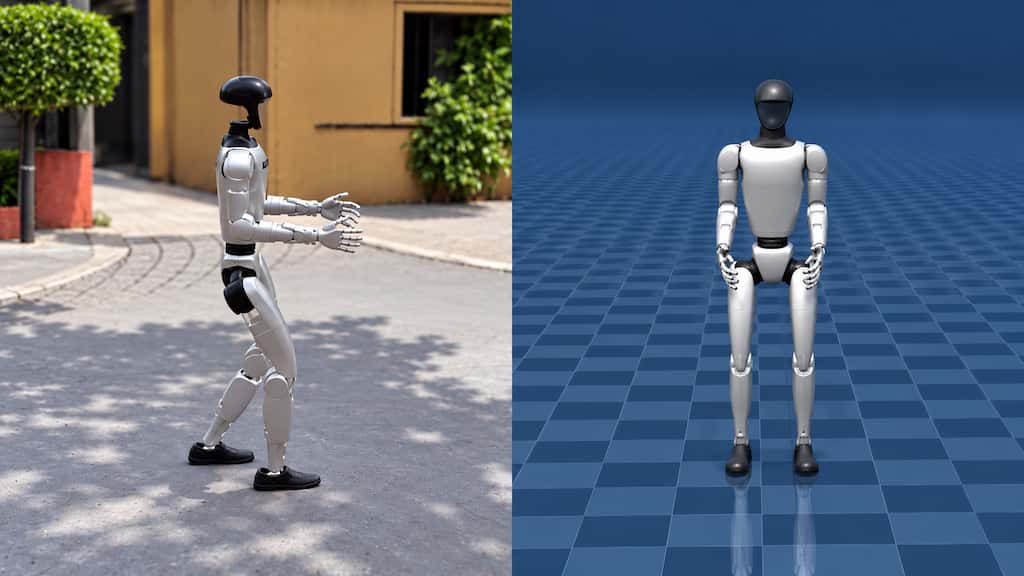
Humanoid Simulation with Marble
Turning real-world streets into 3D humanoid playgrounds with live physics and browser rendering.
September 2026
Living Scrolls
Bringing traditional ink wash paintings to life as explorable 3D worlds.

September 2026
Save the Grannies Robot Simulation
Exploring safer home layouts through 3D reconstruction and humanoid simulation.